
Table of Contents
Introduction
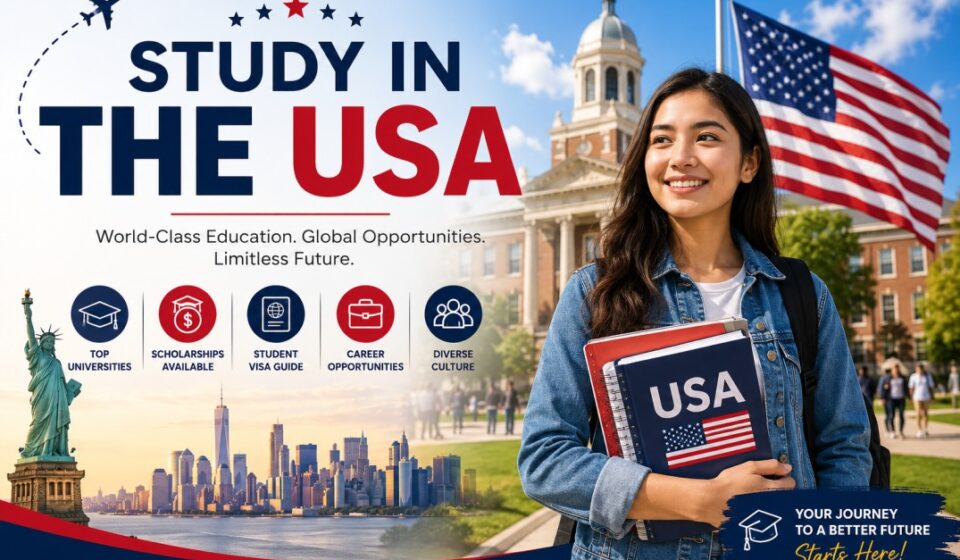
Every year, thousands of Nepalese students dream of studying in the United States. Some want to earn a world-class degree, some want international exposure, and others hope to build a successful global career. Whatever the reason may be, the USA continues to be one of the most popular study destinations for international students.
From top-ranked universities and cutting-edge research facilities to flexible academic programs and excellent career opportunities, the United States offers students an educational experience that goes far beyond the classroom.
However, studying in the USA is not just about choosing a university and applying for a visa. Students need to understand the admission requirements, tuition fees, living expenses, scholarships, and post-study opportunities before making this important decision.
This complete guide will help Nepalese students understand everything they need to know about studying in the USA in 2026.
Why Study in the USA?
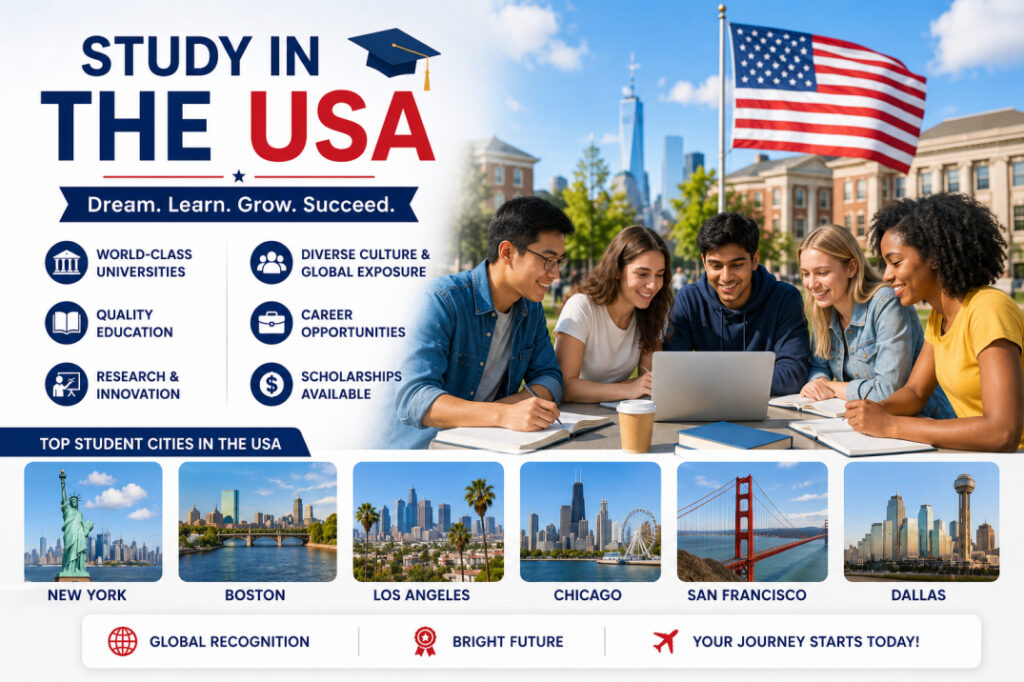
The USA has been a leading education destination for decades. Here are some of the major reasons why students prefer to study in the USA:
World-Class Universities
The USA is home to some of the world’s top universities, including:
- Harvard University
- Massachusetts Institute of Technology
- Stanford University
- University of California, Berkeley
Degrees from American universities are recognized and respected worldwide.
Flexible Education System
Unlike many countries, the USA allows students to
- Choose electives
- Change majors
- Study interdisciplinary programs
- Customize their degree according to their career goals
High-Quality Research Facilities
American universities invest billions of dollars in research and innovation, allowing students to gain practical experience and work with modern technologies.
Excellent Career Opportunities
Graduates from USA universities are highly valued by employers worldwide. Students can also gain work experience through internships and post-study work opportunities.
Cultural Diversity
The USA welcomes students from almost every country in the world, making it one of the most culturally diverse study destinations.
Benefits of Studying in the USA
- Internationally recognized degrees
- Excellent academic facilities
- Modern teaching methods
- Internship opportunities
- High-paying career prospects
- Exposure to different cultures
- Strong alumni networks
- Opportunities for entrepreneurship and innovation
Popular Courses to Study in the USA
Business and Management
- MBA
- Finance
- Marketing
- Business Analytics
- International Business
Information Technology and Computer Science
- Software Engineering
- Artificial Intelligence
- Data Science
- Cyber Security
- Cloud Computing
Engineering
- Civil Engineering
- Mechanical Engineering
- Electrical Engineering
- Computer Engineering
Health Sciences
- Nursing Public
- Health Pharmacy
- Biomedical Sciences
Education System in the USA
Associate Degree
Duration: 2 years
Bachelor’s Degree
Duration: 4 years
Master’s Degree
Duration: 1–2 years
Doctoral Degree (PhD)
Duration: 3–6 years
Intakes in the USA
The USA generally offers three major intakes:
Fall Intake
- August/September which is the most popular intake and maximum course availability is there in this intake
Spring Intake
- January
Summer Intake
- May/June
- Limited courses available
Academic Requirements for Nepalese Students
- Minimum GPA: 2.5–3.0 out of 4.0
- Good academic performance in Grade 12
English Language Requirements
IELTS: 6.0–6.5
PTE: 50–58
TOEFL: 70–90
Duolingo: 95–120
Some universities take standardized tests like the SAT, GRE, and GMAT.
For Master’s Degree
Academic Requirements
- Bachelor’s degree from a recognized university
- Minimum CGPA: 2.7–3.0
English Requirements
- IELTS: 6.5–7.0
- PTE: 58–65
- TOEFL iBT: 80–100
Additional Requirements
- Statement of Purpose (SOP)
- Letters of Recommendation (LOR)
- Resume/CV
- Work experience (for some programs)
Documents Required for USA Student Visa
- Valid Passport
- Academic Certificates and Transcripts
- English Proficiency Test Score
- Financial Documents
- University Admission Letter I-20 Form
- Passport-size Photos
- Statement of Purpose
- Visa Application Forms
USA Student Visa Process
Step 1: Apply to a university.
Step 2: Receive the admission offer.
Step 3: Receive the I-20 form.
Step 4: Pay the SEVIS fee.
Step 5: Complete the DS-160 form.
Step 6: Book a visa interview.
Step 7: Attend the visa interview.
Step 8: Receive your visa decision.
Cost of Study in the USA
The cost of studying in the USA depends on the university, location, and program. Community colleges are usually more affordable, while private universities can be more expensive.
On average, bachelor’s degree tuition can range from around USD 15,000 to USD 40,000 per year. Master’s degree tuition can range from around USD 20,000 to USD 50,000 per year.
Living expenses usually depend on the city. Big cities like New York, Boston, Los Angeles, and San Francisco are more expensive, while smaller cities and towns may be more affordable. On average, students may need around USD 10,000 to USD 18,000 per year for living expenses.
Scholarships and Financial Support
Many US universities offer scholarships to international students. Scholarships may be based on academic performance, leadership skills, financial need, or special talent.
Graduate students may also get assistantship opportunities such as teaching assistantships or research assistantships. These opportunities can help reduce tuition costs and provide valuable experience.
Can Students Work While Studying?
Yes, international students in the USA can work part-time on campus while studying. Usually, students are allowed to work up to 20 hours per week during academic sessions and full-time during official breaks.
Students may also get practical training opportunities through CPT and OPT. These programs allow students to gain work experience related to their field of study. Students in STEM fields may also qualify for extended OPT, which is one reason STEM programs are very popular among international students.
Career Opportunities After Graduation
A US degree can open many career opportunities around the world. Students gain not only academic knowledge but also practical skills, communication skills, problem-solving ability, and international exposure.
Many graduates work in fields such as technology, business, finance, engineering, healthcare, research, and education. Even if students return to Nepal, a US degree and international experience can help them stand out in the job market.
Conclusion
Studying in the USA can be one of the most important decisions in a student’s life. It offers high-quality education, global exposure, practical learning, and strong career opportunities. However, students need proper planning before applying.
Choosing the right university, understanding the cost, preparing documents, writing a strong statement of purpose, and preparing well for the visa interview are very important steps. For Nepalese students who are serious about building an international career, the USA can be an excellent destination for higher education.
Also Read:
Complete Guide to Study in the UK for Nepalese Students in 2026
Education or opportunity? Understanding the real drivers of student migration from Nepal
Why Nepali students can’t wait to go abroad
Over 88,000 students obtain NOCs online in three years as system expands
Industry Analysis of Education Consultancy in Nepal
Study Abroad: Demand Analysis and Growth Trends in Nepal (2020–2025)